June 18, 2026
Follow Along As I Create Re-Usable Author Ads Templates From Reader Group Posts
I am looking at how high-performing e-commerce communities handle advertising and I notice they place a massive emphasis on user-generated content.
Authors use reviews as the primary text in ads, but that is a limited application of the concept. I want to find unique formats for adverts that mimic organic platform content.
Organic formats have a higher click-through rate because of ad blindness. Users get used to ads and start ignoring them, so the closer an advert mimics native content, the better the engagement will be.
Mimicking native content increases engagement and lowers costs. I merge native formats with my own sales-heavy styles to find a middle ground where we can court both high engagement and sales.
I recently went into a reader group to study how people actually talk because I want there to be no difference between how a reader sees a group post and how they see my advertisement. When they see it on their feed, they should feel like they are seeing a recommendation from a peer rather than an author trying to shove a book down their throat.
I have divided this process into two parts, which are analyzing the structure of the first line and studying the image style.
The Strategy of Active Sentiment
I noticed something interesting while scrolling through reader discussions.
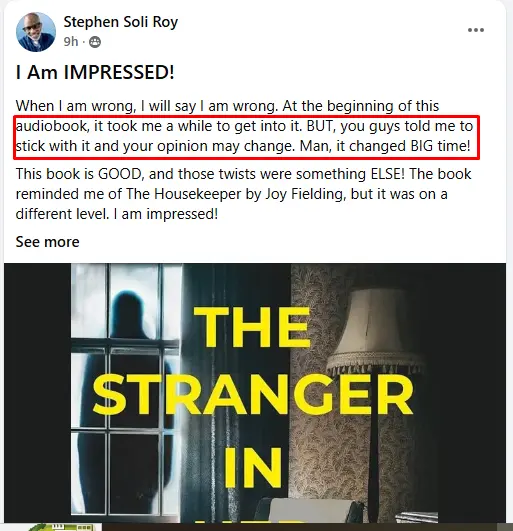 People often post about finishing one book and starting another. We often see reviews written after the fact, but we rarely see sentiment from readers who are actively in the middle of a book. This is a powerful angle.
If you have an active newsletter or a Facebook reader group, you can easily ask your readers to send you active book sentiment. Again, I’m not talking about typical reviews here; think simple reader chatter like, “I just started book X. What attracted me to this is XYZ. I also read {comp author 1} and {comp author 2}.” Or “I’m on page Y or {book title}. Reminds me of {comp book 1} and {comp movie 2}.”
Ask them what page they are on and what they are feeling in that exact moment; if you can ask for this via a video collection tool like Videoask, the better. (Because that raw emotion feels more authentic than a polished review).
If you use bookfluencers for these types of ads and you're in the US, FTC laws require you to disclose if these readers were compensated for their appearance. You can state that “the featured people are active readers who have been compensated,” which satisfies legal requirements without removing the punch from the advert.
Template 1: The "Even If" Objection Handler
I found a post where a reader asked for an unhinged book because they work in healthcare and their emotions have died (so they had no sensitivity to triggers).
This captures the world of the reader and makes them feel real. I translated this into a technical formula using placeholders, similar to how I used to write cold email templates.
The First Line Structure:
DO YOU NEED AN {ADJECTIVE E.G. UNHINGED} BOOK THAT'LL {{IMPACT. E.G BLOW YOUR MIND}}. EVEN IF YOU {ACTION PHRASE, E.G. WORK IN} {CAREER WHERE YOU SEE A LOT AND YOUR EMOTIONS DIE. E.G. HEALTHCARE}.
Using the "Even If" structure allows you to address an objection or a specific reader reality before it comes up. If I am selling a cozy mystery to people in high-stress tech jobs, I can swap the variables.
I might say, "For those who need a peaceful escape even if you work 60-hour weeks in soulless careers (like tech, 😅, don’t come for me tech bros…)." This elicits banter or arguments in the comments, and I embrace that. (Because engagement, even if it is snarky, tells the algorithm to show the ad to more people like that).
Template 2: Contextual Gifting and Location
This structure relies on "Voice of Customer" research. You have to think about the five whys: why, when, where, what, and who. Each one of these is a possible ad angle.
For example, I saw a post where someone mentioned being gifted a book for an upcoming holiday and I thought it’d make a great contextual ad. Here’s why:
If a reader has posted holiday pictures/is planning for a holiday, Facebook somehow knows they’re on vacation mode/vacation research mode based on their in-app activity.
So an ad that leads with that angle appeals to that bucket of people, even if they’re not whale readers/last read in 1963. For example, here’s how a template that focuses on place could look like:
{Place-based scenario}: E.g., I heard there are people who gift you books if they hear you’re going on holiday? {Second line to support the first}: Anyway, if it so happens you’re one of these lucky people. But you happen to read {insert genre, e.g. dark romance} but mom insists on giving you {insert opposite genre. E.g., a geography textbook } {Transition to your product}: Well, take the gift. But gift yourself {name of your book} too, so you actually enjoy the time off… {Follow-up line that transitions fully to a sales message}: It’s a {book premise description}. Fans of {comp author 1} and {comp author 2} will love it.
Template 3: Damming the Demand
I use this method to "dam" the river of attention. If a major author like Nora Roberts is trending, the river of attention is already flowing in that direction. I want to leverage that existing audience by positioning my book as the natural next step.
The First Line Structure:
FINISHED A NORA ROBERTS BOOK AND I'M ABOUT TO JUMP INTO {{TITLE OF YOUR BOOK}}, IF THIS IS YOU, THEN YOU TOO HAVE ALWAYS LOVED NORA ROBERTS' STORIES. THE STRONG CHARACTERS.... THAT'S WHY I WROTE XYZ. IT'S LIKE {{TITLE OF COMP BOOK}} WITH {{TWIST YOU ADDED TO THE GENRE}}
When a person reads that first line, they think they are reading a first-person account from a fellow reader. By the time I pivot to being the author, the reader does not feel cheated. I am identifying a shared taste and then offering a relevant alternative. This works because I am mirroring the native "I just finished X, what next?" posts common in reader groups.
Template 4: The Repulsion Hook
I saw a post that was a bad review from someone who found a "hyped" book predictable. I can turn this into a creative asset, especially for authors who write dark romance or books with heavy trigger warnings.
The First Line Structure:
IF THIS IS YOUR FACE AFTER READING MY TRIGGER WARNINGS. (IMAGE OF STANK FACE). THEN THIS BOOK IS NOT FOR YOU.
This is a specific "repulsion" strategy. I am actively trying to push away people who are not a good fit. (Because repelling the wrong audience is the fastest way to attract the right one). It creates a "dare" for the reader who enjoys intense content.
Image Mechanics and Organic Aesthetics
Eighty percent of the success of an ad depends on the imagery. When I study organic posts, I notice the backgrounds are remarkably unremarkable. They are not professionally done photos. You'll see Kindles resting on someone’s waist, or flower-patterned shorts. Here are examples of the types of concepts to watch for in these groups and try to replicate for your ad images.
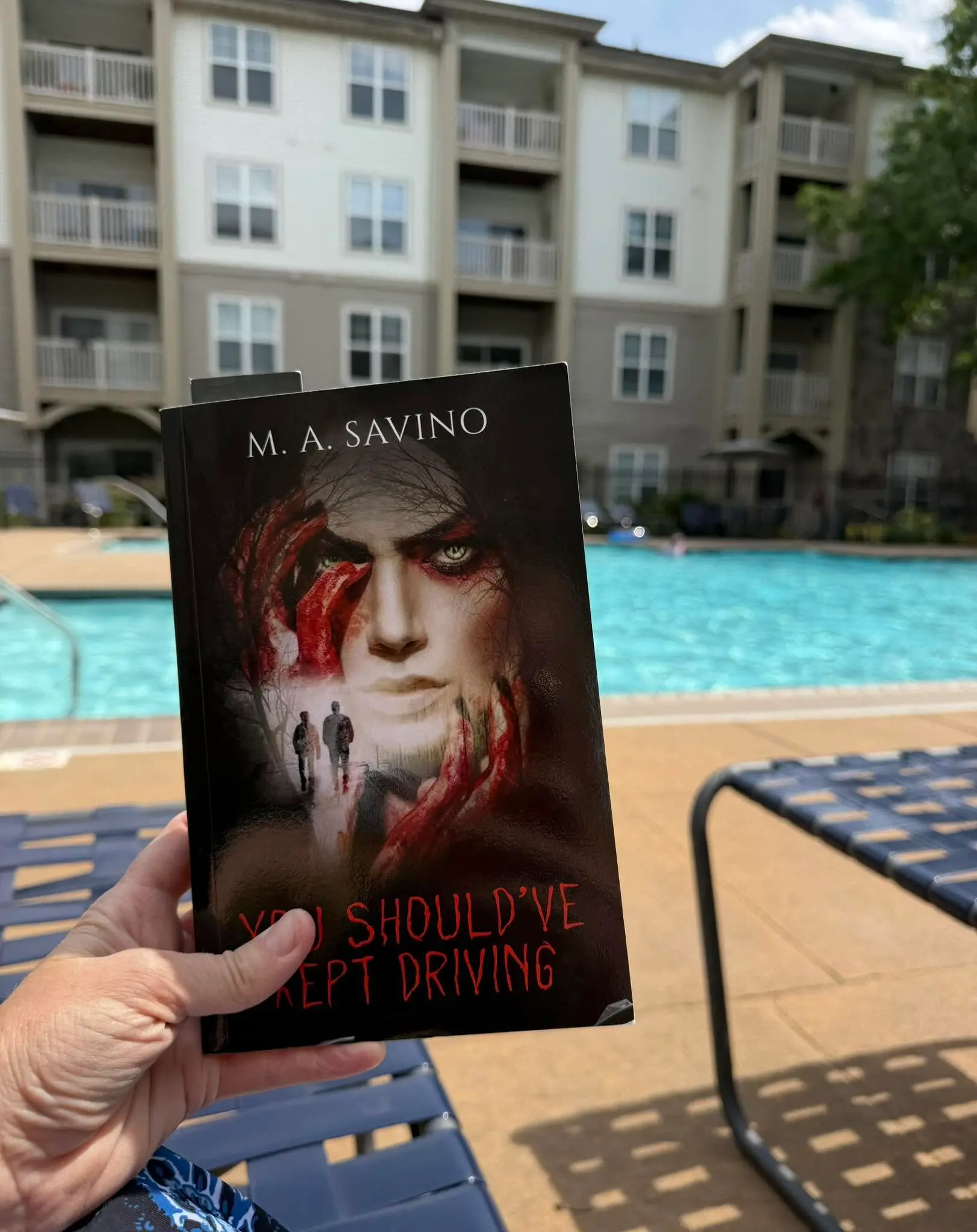 Many people trying to switch off and put their feet up will gravitate towards stuff like this👆🏿.
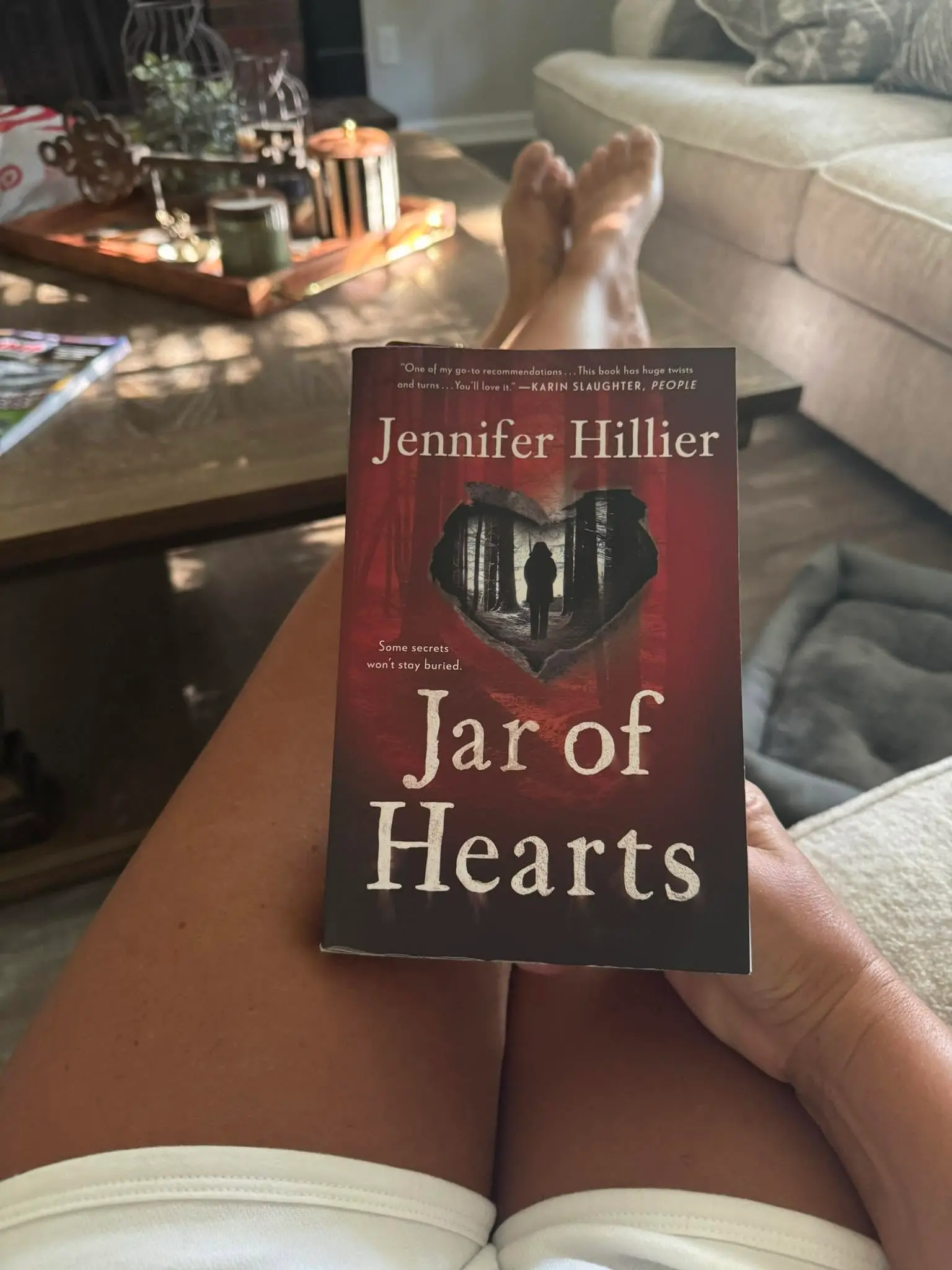 For stressed out audiences looking forward to the end of the day when they finally get to relax. (I see that and immediately think, "that could be me.")
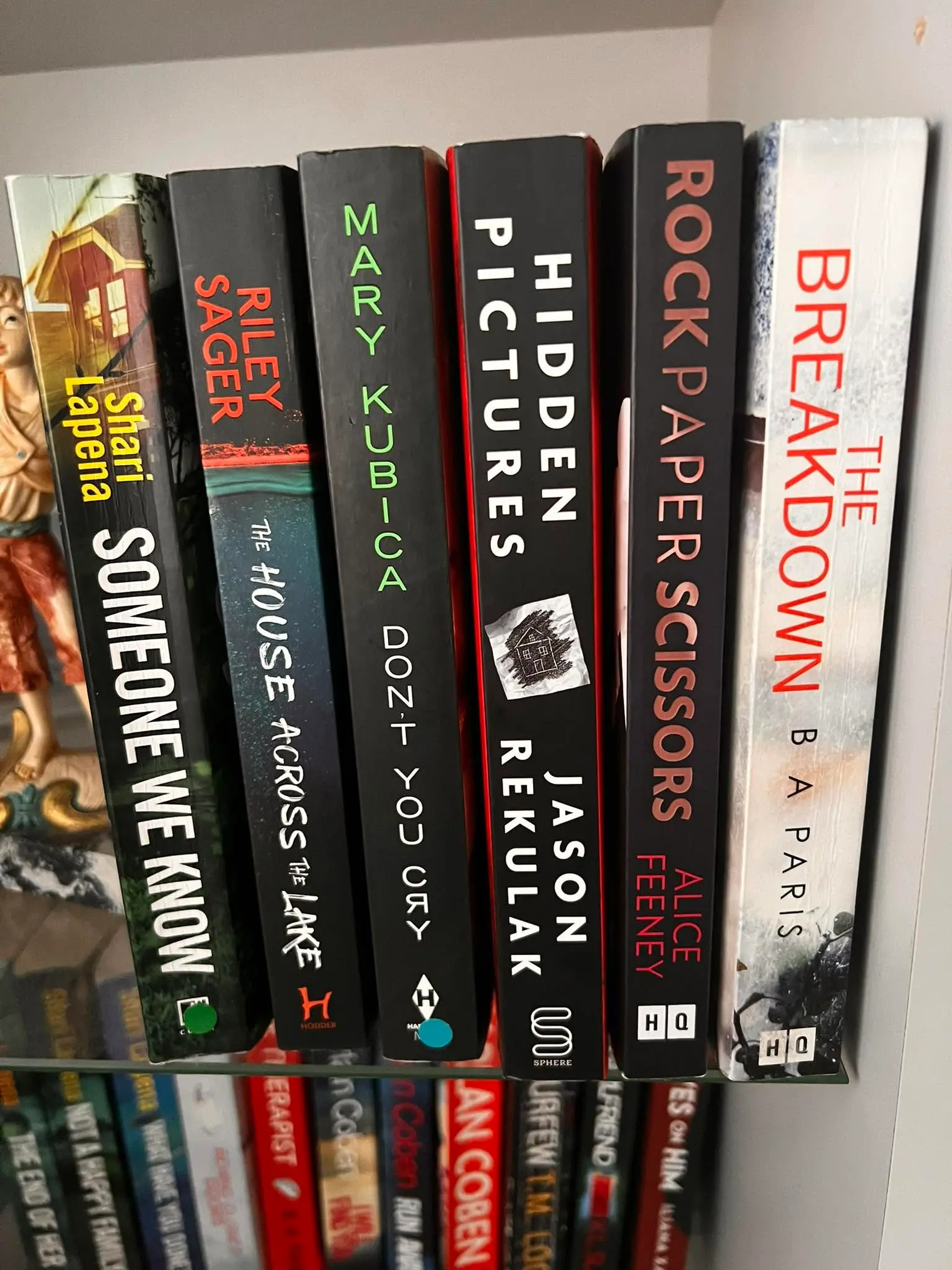
This👆🏿 concept will need you to be a bit creative. Like if you placed all your books on a shelf next to your comp author/category leader's book, you might directly appeal to fans of that author/genre without having to say much. Plus, it'll make your book ads feel like third-party recommendations rather than an author's hand pushing pages down people's throats while singing kumbaya...
Why? Because people mostly see such pictures when a peer is sharing stuff on social; never in ads.
I’d replicate this unpolished look by taking photos in "ridiculous" or mundane places.
- The Spine Shot: Place the book on a flat surface like grass or sand with the spine showing.
- The Shelf Shot: Place your book on a shelf next to a genre giant like Nora Roberts and draw a simple arrow pointing to your title.
- The Handheld Kindle: A photo of a Kindle or phone on a bed sheet or a lap, rather than a studio shot.
Anyway, that's it for today. PS: I’m currently organizing these structures into a larger spreadsheet to build a library of reader-style templates (specifically ad first lines). Each template serves as a piece of a system designed to look like what readers see from their peers rather than generic author ads. Keep an eye out for this.
PS: I believe in cross-training, using techniques from seemingly unrelated spaces and adapting them for your genre or industry. So if you plan to create book ads but have trouble figuring out how to structure hooks, first lines, imagery, the lower-third (headline, call to action, and description), etc...
I curated 107 romance ads and added commentary for each section to show you what works and why. Romance authors are some of the most aggressive marketers in fiction, so you'd do well seeing what they are up to.
Authors from all niches are using it to learn by exposure. For example, you see romance authors using trope maps in interesting ways. On the other hand, I have never seen action thriller or crime book ads leveraging trope maps, even though we do have entrenched tropes. Why not? Get it here: Romance Ads Swipe File.